


On May 11th, 1985, a catastrophic event shook the football world to its core. The Bradford City stadium fire disaster, which claimed the lives of 56 people and injured more than 250, was a tragedy that should never have happened. To mark the 38th anniversary of this tragic event we would like to pay our respects while also reflecting on the lessons learned and the progress made in stadium safety over the past four decades.
Background:
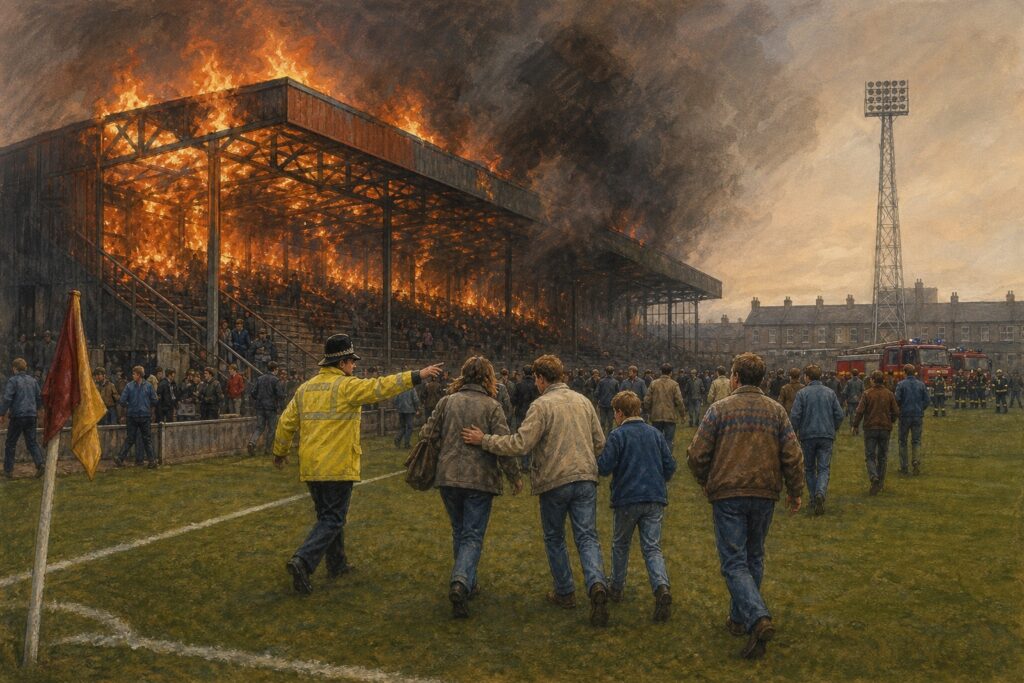
The Bradford City Valley Parade Stadium fire disaster occurred during a football match between Bradford City and Lincoln City. It was caused by a small fire that broke out in the main stand at Valley Parade, the home of Bradford City. The fire quickly spread, fueled by the highly combustible materials used in the stand’s construction, and engulfed the entire stadium in just a few minutes.
The tragedy claimed the lives of 56 people, including two Lincoln City supporters, and injured over 250 more. The disaster was a wake-up call for the entire football industry, and the lessons learned from it have had a profound impact on stadium safety in the UK and around the world.
Lessons Learned:
The Bradford City stadium fire disaster was a result of a combination of factors, including poor stadium design, inadequate safety measures, and a lack of preparedness on the part of the emergency services. As a result, a number of key lessons were learned, which have shaped stadium safety standards in the UK and beyond.
Firstly, the tragedy highlighted the importance of proper stadium design and construction. The main stand at Valley Parade was constructed using highly combustible materials, which allowed the fire to spread quickly and uncontrollably. Since the disaster, stadium construction regulations have been tightened to ensure that all new stadiums are built to the highest safety standards, with materials that are fire-resistant and non-combustible.
Secondly, the disaster exposed the need for better safety measures within stadiums. At Valley Parade, there were no fire sprinklers or smoke detectors, and the stadium’s fire exits were not clearly marked or easily accessible. Today, stadium safety measures have been significantly improved, with mandatory requirements for fire safety equipment, emergency exits, and evacuation plans.
Thirdly, the disaster highlighted the need for better training and preparedness among stadium staff and emergency services. At Valley Parade, the stadium’s staff had received little or no training in fire safety procedures, and the emergency services were ill-equipped to deal with such a large-scale disaster. Today, stadium staff receive comprehensive training in safety procedures, and emergency services are well-prepared for any eventuality.
Improvements:
Since the Bradford City stadium fire disaster, significant improvements have been made in stadium safety, not just in the UK but around the world. In the UK, the Safety of Sports Grounds Act 1975 was replaced by the Sports Grounds Safety Authority (SGSA) in 2011, which has taken a more proactive approach to stadium safety. The SGSA is responsible for regulating safety at all sports grounds in England and Wales, ensuring that they meet strict safety standards.
Stadiums today are built to the highest safety standards, with the latest technology and materials used in their construction. Fire safety equipment, such as sprinklers and smoke detectors, is now mandatory in all stadiums, and emergency exits are clearly marked and easily accessible. Stadium staff are well-trained in safety procedures, and emergency services are well-prepared to deal with any eventuality.
Final Thoughts:
The Bradford City stadium fire disaster was and still is a tragedy that shook the football world to its core. However, it also served as a catalyst for significant improvements in stadium safety, not just in the UK but around the world. Today, stadiums are built to the highest safety standards, with the latest technology and materials used in their construction. Fire safety equipment is now mandatory in all stadiums, and staff are well-trained in safety procedures. The lessons learned from the disaster have had a profound impact on stadium safety, and the progress made over the past four decades is a testament to the dedication and hard work of everyone involved in the industry.
However, while significant progress has been made, it is important to remember that stadium safety is an ongoing process. New technologies and safety measures are constantly being developed, and it is essential that stadiums continue to evolve and adapt to meet the ever-changing safety and security landscape.
We are committed to playing our part in this ongoing process by providing expert training and qualifications to ensure that stadium staff are well-prepared and equipped to deal with any safety or security situation. We will continue to work closely with Ground Safety Managers and other industry partners to share best practices and stay up-to-date with the latest developments in stadium safety.